Wait, not everything on the internet is true?

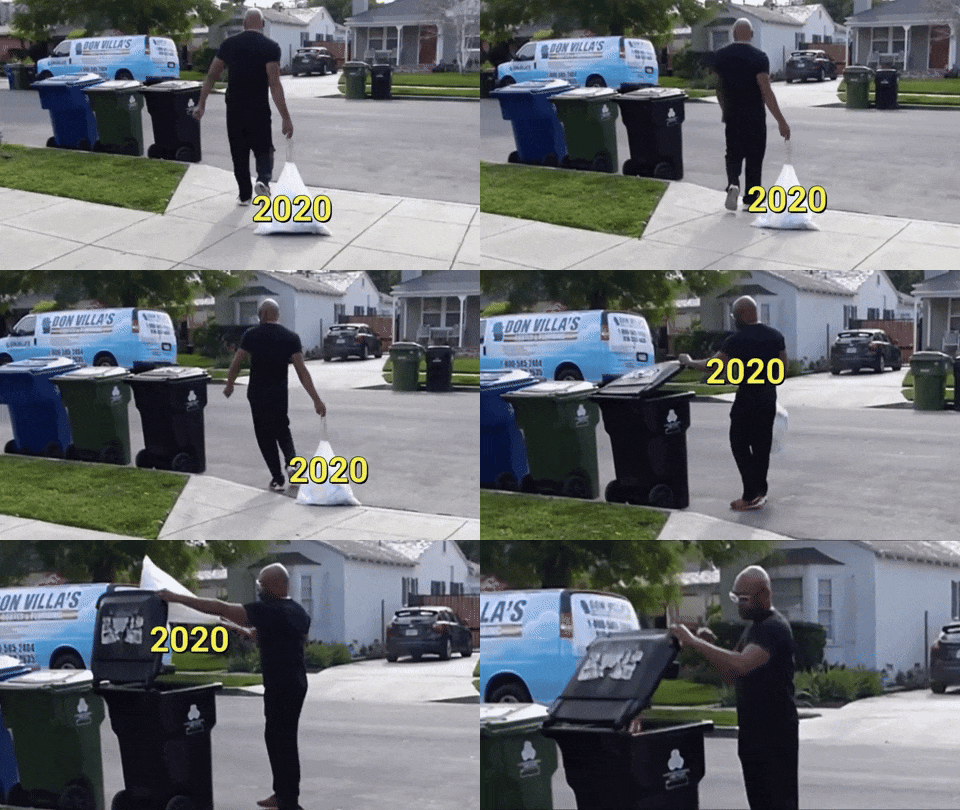
With this new way of teaching, a new world of digital literacy has burst its way into every classroom across the country, whether it has been realized or not, and with this comes great responsibility on behalf of the educator and the student. Digital literacy encompasses more than just computer skills. It is the combination of digital tool knowledge, critical thinking skills and social engagement in a digital environment (Promethean, 2021).
“Students are immersed in a digital world. We need to help them think critically and carefully about the tools and the communities that they're speaking to. We also want to give them a voice, a real voice in the world because they are real people" (Turner & Hicks, 2017, 6:05).
Keeping students safe and engaged in an internet-dominated society, while also giving them a voice, is one of the biggest challenges educators are facing. Children are the most vulnerable internet users, especially during a time when isolation and lock-downs is the norm in most households (Promethean, 2021). The internet can take its toll on students both socially and emotionally because they are constantly having to determine the difference between real and fake.
Digital platforms “can cause students to compare their existence to the often-fabricated online lives of others, inciting feelings of inadequacy, detachment, isolation, and even the development of mental health issues. They can also leave pupils open to misinformation, manipulation, and fake news” (Promethean, 2021, "Digital Literacy and e-safety" section).So how do we keep students safe from these threats while also delivering meaningful and engaging content? How do we build an environment of trust with our students if we don’t give them the tools to differentiate fiction versus reality? As educators, especially in a world dominated by technology, we want to teach our students how to thrive socially, emotionally, and intellectually. Even the youngest learners need to understand how to see beyond what is posted on social media platforms and use evidence to determine the factuality of what they are reading. According to authors Turner and Hicks (2017), a hierarchy of evidence offers students a way to think through information they are reading. Scientific law (the highest form of evidence because it’s typically a scientific fact), statistical data (can be manipulated but is typically trustworthy), opinions from experts or noted individuals, and anecdotal evidence (based off of observations) all have pros and cons, but they get students to start asking questions about the content (Turner & Hicks, 2017).
 |
| billmoyers.com |
[Abraham Lincoln Meme]. (n.d.). Moyers. https://billmoyers.com/wp-content/uploads/2020/08/dont-believe-the-meme.jpg
Promethean. (2021, April 29). Digital literacy in the classroom. How important is it? Promethean Blog. https://resourced.prometheanworld.com/digital-literacy-classroom-important/
Turner, K.H., & Hicks, T. (Host). (2017, January 6). Argument in the real world [Audio podcast episode]. In The heinemann podcast. Heinemann. https://blog.heinemann.com/the-heinemann-podcast-argument-in-the-real-world
Turner, K. H., & Hicks, T. (2017). Teaching adolescents to read and write digital texts: Argument in the real world. Heinemann.


3 comments
I am so glad you wrote about the challenges we've all faced this past year. It was a struggle for sure! you are absolutely right about our role as educators and how we have to continue showing our students the importance of proper digital citizenship and continuing conversations about these topics. Having productive conversations in the classroom is something that I strive to achieve daily, whether they are digital citizenship related or a completely different topic. One of the main struggles that I see with my students' Writing is that they have a hard time finding evidence that's relevant to their topic they're writing about and they don't take the time to do their research. The first criteria for mastering learning targets In table 7.2, Turner and Hicks States: "I can develop a claim and support it with relevant evidence" (2017). I feel like once this area is mastered, the other learning targets will not be nearly as daunting and students will feel much more comfortable and even start to enjoy Reading and writing digital texts.
ReplyDeleteTurner, K. H., & Hicks, T. (2017). Teaching adolescents to read and write digital texts: Argument in the real world. Heinemann.
**I apologize for any errors. This font is crazy!!!
Well The font looks normal after it posts FYI LOL
DeleteI love your blog and how connected I feel to this topic. It is so relatable. I agree that we as educators need to take a more proactive approach with teaching our students (especially in this digital age) to be conscientious about where and how to locate reliable information and not fall victim to false content. This is something that I Can easily incorporate in the elementary classroom. According to Egresitz, "Topics and skills like digital understanding and citizenship, entrepreneurship, leadership, and team building can be addressed through short videos and formative assessments, for
ReplyDeleteexample, without taking an entire period and losing that work time" (2020). Our computer lab teacher does a fabulous job of introducing internet safety and using trustworthy sources to our K-2 students already, but we need to have reinforcement in the classroom. students need explicit instructions for what is expected of them. Teaching with the use of Learning targets is something that we do every single day. Expectations are clear and can be laid out. Turner and Hicks (2017) state, "sharing learning targets with students when they embark on a project helps them understand and own the skills involved in doing this work" (p. 129). If we give students learning targets about finding relevant information and model how this looks, we can help students be more aware of the information the are collecting and make more meaningful arguments digitally.
Egresitz, J. (2020). Teaching Digital Understanding and Citizenship: Modern Skills for the Classroom and Beyond. Technology and Engineering Teacher, 80(2), 8–12.
Turner, K. H., & Hicks, T. (2017). Teaching adolescents to read and write digital texts: Argument in the real world. Heinemann.